

“Almost right” isn’t good enough.”
Product quality isn’t something you fix at the end. It’s built from the beginning.
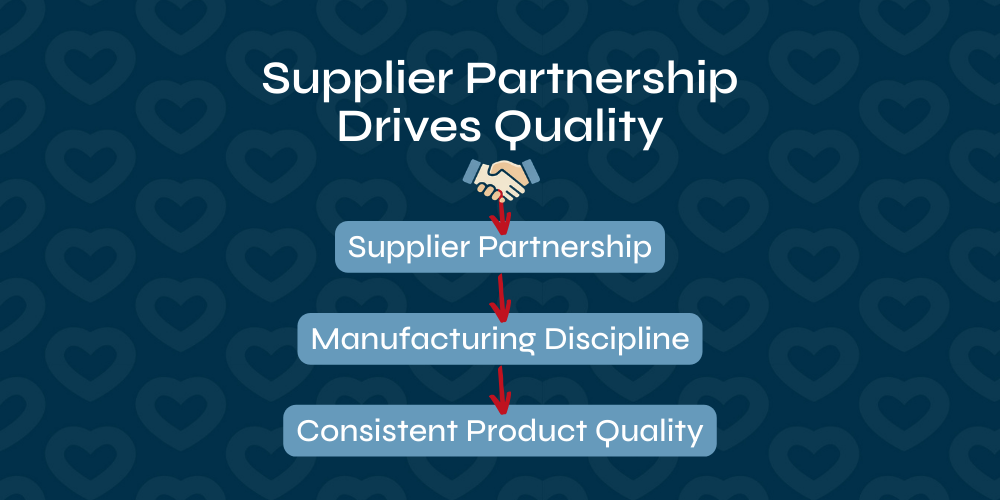
Long before packaging, formulation, or shelf placement, supplier and manufacturing partnerships determine how consistently a product shows up for customers.
Across human wellness, pet care, and home essentials, the pattern is clear: when partnerships are strong, quality compounds. When sourcing is transactional, small cracks appear—and at scale, they widen.
Strong supplier partnerships aren’t optional.
They are a risk management system.
And ultimately, it comes back to the customer. They expect the same standard—every time.
Here’s how we build partnerships that protect that trust.
Why Partnerships Matter at Scale
Transactional sourcing can work when you’re producing hundreds of units. It breaks down when you’re producing millions.
Across Wholesome Goods:
- 1M+ units produced every month
- 1,950+ Walmart stores
- National online retail partners, including Target, Chewy, and TractorSupply
- Direct-to-consumer operations across multiple brands
- Highly regulated categories, including dietary supplements and pet supplements aligned with industry standards
At this level, small problems don’t stay small.
A one percent issue across a million units affects customer experience, retailer confidence, and brand trust.
“Behind every great product is a great partnership because quality only holds up when both sides care about the outcome.”
— Cesar Contreras, Head of Supply Chain
So what does that level of partnership look like in practice?
The Wholesome Partner Vetting Framework
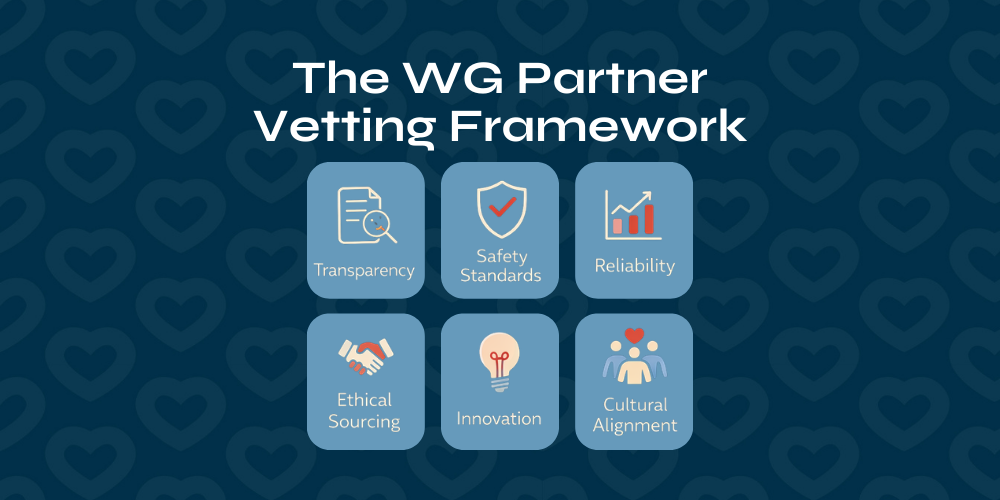
Before a supplier becomes long-term, they’re evaluated against one guiding question:
Can this partner maintain quality when things change?
“A great supplier partnership feels like an extension of our team; they’re proactive, honest about constraints, and willing to work through problems instead of hiding them. We value long-term alignment over short-term wins.”
— Cesar C.
1. Transparency & Documentation
We start with documentation—not decks.
Partners must provide:
- Batch-level Certificates of Analysis reviewed line by line
- Contaminant testing where relevant
- Clear pass/fail criteria tied directly to final product specifications
Generic certificates aren’t enough.
“Defensiveness or vagueness when asked about sourcing, testing, or past issues is a red flag. If someone can’t explain their process clearly, the process likely isn’t solid.”
— Cesar C.
Transparency allows issues to be traced precisely, corrected quickly, and prevented from repeating.
2. Safety Standards & Change Control
Many quality issues don’t come from dramatic failures. They come from small, undocumented changes.
Change control is non-negotiable.
We require:
- Formal approval for ingredient, material, or process changes
- Versioned documentation with clear revision histories
- Advance notice before substitutions, not after
These controls prevent silent specification drift that often only becomes visible after products are already in the market.
3. Reliability & Communication
Reliability isn’t about never missing a timeline. It’s about surfacing risk early.
Partners must communicate constraints upfront, flag delays before they escalate, and provide realistic lead times.
From a retail standpoint, this discipline matters.
“Strong supplier partnerships ensure consistent quality, reliable supply, and speed to shelf—protecting in-stock rates and shopper trust. When partners win, retailers win through fewer disruptions and better execution.”
— Janan Issa, Director of Retail
4. Ethical & Responsible Sourcing
Ethical sourcing isn’t a tagline. It’s a paper trail.
It means we can trace the origins of materials, understand how they’re produced, and verify that standards are met before anything reaches production.
Shortcuts usually save time or cost in the short term, but they create risk later.
“If we can’t stand behind it internally, we won’t put it in market.”
— Cesar C.
Responsible sourcing protects more than margins.
It protects customers, retailers, and the long-term credibility of the brand.
5. Cultural Alignment
Cultural alignment shows up when something goes wrong.
Do partners escalate issues or bury them?
Do they protect standards or protect short-term margins?
Do they fix root causes or apply temporary patches?
Alignment isn’t about shared values on paper. It’s about how decisions get made under pressure.
As Chris Lindfield, Head of Marketing & Research, notes:
“Brands often talk about sourcing and manufacturing without showing how those choices are validated. Without proof points like certifications, testing, or standards, those claims can feel hollow.”
Credibility doesn’t come from what partners promise—it comes from how they act when it’s inconvenient.
When both sides are willing to surface problems early and solve them properly, quality holds.
6. Innovation Capability
Strong partnerships don’t just prevent mistakes; they improve products.
When trust is established, suppliers are more willing to challenge assumptions, suggest alternatives, and flag issues early, even if it slows things down in the moment.
That’s where real innovation happens.
As Cesar explains:
“When trust is already there, we can move faster without increasing risk, fewer rechecks, quicker problem-solving, and earlier access to better ingredients or materials. Good partners help us avoid rework, which is where most delays actually come from.”
How Long-Term Partnerships Protect Quality Over Time
When we work with the same trusted suppliers across multiple launches, we don’t start from scratch.
They understand our standards.
They know our specifications.
They know what excellence looks like.
That means fewer surprises and more consistent results from run to run.
Customers may never see the process, but they experience the reliability.
And reliability builds trust.
Where This Shows Up Across Our Products
Supplements
In dietary supplements across the U.S., UK, and EU, regulatory compliance is only the starting point. Strong manufacturing partnerships ensure standards hold across markets overseen by authorities such as the FDA and EFSA.
We rely on partners who provide:
- GMP-certified production environments
- Ingredient specifications informed by published research and established dosage parameters
- Batch-level Certificates of Analysis
- Third-party identity, potency, and purity testing
- Lot-level traceability
- Formal change-control systems and QA audits
Beyond compliance, partners must substantiate ingredient quality and research alignment with documented potency ranges and safety thresholds.
Compliance sets the baseline. Research-backed repeatability builds credibility—and only happens when supplier relationships are long-term and disciplined.
Textiles & Packaging
Small shifts in color, fabric weight, or labeling don’t just change aesthetics—they change trust.
People decide fast—online or in aisle.
“Within the first 3 seconds of seeing a product, shoppers decide if they trust the product and immediately understand what it is, who it’s for, and why it’s different—through clear branding, claims, and price alignment.”
— Janan I.
For our brands, shelf appeal isn’t decoration; it’s clarity.
“Simplicity, bold contrast, and clear, legible typography are what make a product feel premium fast. If it’s overly crowded or hard to read, it loses that trust immediately.”
— Jules Scheiber, Director of Brand Creative
When we tested metallic finishes on Pattern Wellness labels, glare reduced readability. We moved to matte to protect legibility across lighting and channels.
That shift required packaging partners who could execute consistently from run to run.
When execution slips, trust slips.
When partners hold the standard, products feel reliable.
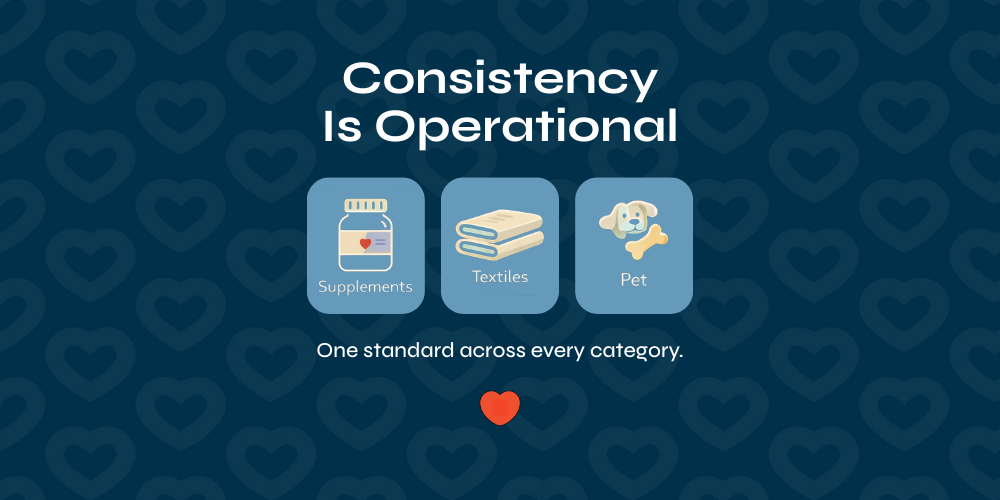
Consistency is operational discipline made visible.
Pet Wellness
In pet supplements, safety and palatability are inseparable. If the dog won’t eat it, it won’t work. And if it isn’t produced consistently and responsibly, it shouldn’t be trusted.
Across the U.S., UK, and EU, regulatory compliance is only part of the equation. The real challenge is delivering the same soft chew, the same way, every time. That consistency depends on disciplined manufacturing partnerships.
Strong partners protect:
- Texture consistency
- Flavor stability
- Accurate dosage
- Documented quality controls
- Retail and channel compliance
We maintain ongoing oversight of labeling, claims, and documentation across markets—working closely with manufacturing and regulatory partners to uphold standards from production to shelf.
At scale, small inconsistencies become visible quickly. Strong partnerships reduce that risk before customers experience it.
Excellence Built on Accountability
At Wholesome Goods, quality isn’t a final checkpoint. It’s embedded in every relationship.
Ownership isn’t outsourced. When something goes wrong, we stay involved and fix it at the source.
“Behind every great product is a great partnership because the best outcomes come from teams that care about getting it right, not just getting it done.”
— Chris L.
That discipline defines how we build—and who we build with.
See the Work Behind the Work
Great products don’t happen by accident.
Neither do the systems, partnerships, and decisions that support them.
- Follow Wholesome Goods on LinkedIn for behind-the-scenes sourcing, product, and operations insight.
- Explore our family of brands to see how long-term partnerships shape quality across wellness, home, and pet.
- Want to help build what lasts? Visit our Careers page to see open roles.